
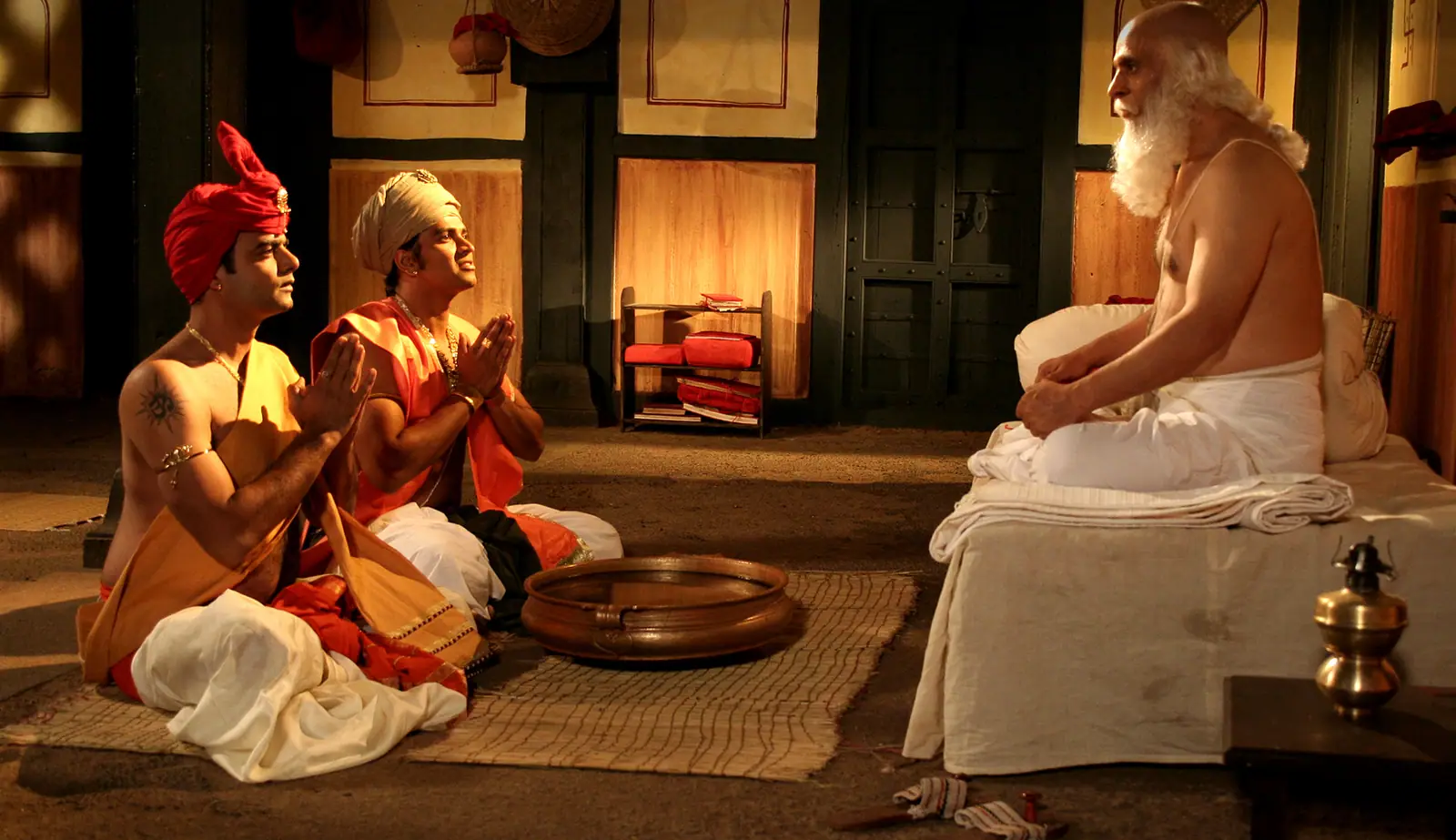
The sequential flow of Upanishadic concepts
Fifty-two episodes knitted into one string — each concept building on the last, from the Vedic roots to the summit of Self-knowledge.
Fifty-two episodes in five movements: the Vedic Culture (1–4), cultural values of the individual and society (5–22), the entire Upanishadic Wisdom (23–42), the practical steps to live it (43–51), and a closing expression of gratitude (52).
Vedic Culture
The Vedic Culture is introduced — the journey begins with the spirit of enquiry.
-
Episode 01
The Journey (Jeevan Yatra)
Introduction to Upanishad Ganga
-
Episode 02 · Think
Introduction to Upanishad Ganga, Part 2
Characters Sri Krishna and Gandhari
The son resolves to uncover the Upanishadic Wisdom in a drama format through the Great Indian Theatre. Through this MainCharacters we enter into Upanishadic thoughts per se. The essential philosophy of the entire Upanishadic thought – the Knowledge of the Self – is briefly dealt in this episode so that the audience is introduced to the essentials of the Upanishadic teaching right at the beginning.
-
Episode 03 · Knowledge Transforms
Knowledge for All
Characters Valmiki
This Upanishadic Wisdom is for all. It transcends all narrow man-made divisions. The only criterion for gaining this knowledge is the earnest wish to know and the sincere will to transform oneself for the better.
-
Episode 04 · Universal Welfare
Purpose of Knowledge
Characters Ashtavakra and Bandi
Knowledge is power. Hence knowledge is meant for the benefit of the totality. If knowledge becomes a means to fatten one’s ego, and if knowledge is used as a sword of destruction, the very purpose of knowledge is lost. Beware for such wrongly wielded knowledge destroys the very destroyer.


Cultural Values
Cultural values at the levels of the individual and the society: the Vedas, the four goals of life, the four stages of life and the sacred milestones.
-
Episode 05 · Veda – The Source of Dharma, Part 1
Veda, Part 1
Characters Dara Shikoh
What are the Vedas? That the Vedas are the very basis of the Indian ethos, their all-inclusive nature, and all-welcoming spirit is brought out in this episode. That this Vedic wisdom provides us the means to beatify individual life, uplift society, and integrate the totality is bring out in this episode.
-
Episode 06 · Veda – The Source of Dharma, Part 2
Veda, Part 2
Characters Dara Shikoh
This is the continuation of the thoughts of the earlier episode. Veda means knowledge. On what basis is the Vedas divided into four? How again is each of the four Veda sub-divided? What does each of the sub-divisions deal with? How do they uplift the human spirit…these ideas are dealt with in this episode.
-
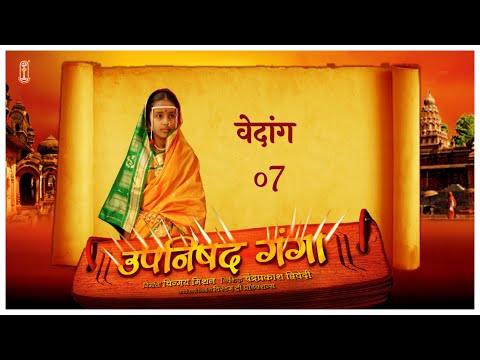
Episode 07 · Vedanga
Vedanga
Characters Bhaskaracharya
There are six limbs of the Vedas such as the ’Nirukta’ – the science of word formation, ’Vyakarana’ – the science of sentence-structure and so on. These Vedangas are meant for better understanding of the Vedic Wisdom.
-
Episode 08 · Upaveda
Upaveda
Characters Kacha and Devayani
Medicine, fine arts, commerce, architecture, science of warfare – these are the Upavedas or subsidiary Vedas. These are related to the prosperity and completeness of the nation.
-
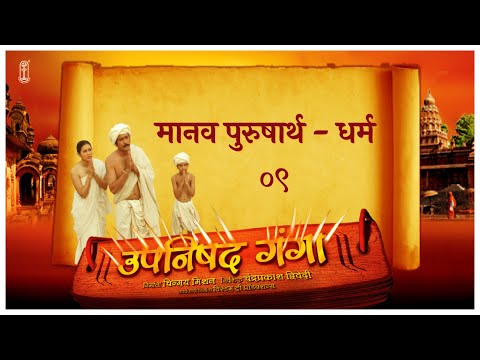
Episode 09 · The Human Goal – Dharma
Four Purusharthas – Dharma
Characters Raja Harishchandra
Purushartha means the human goals. The four human goals are dharma (nobility), wealth (security), kaama (enjoyment) and moksha (liberation). This episode deals with dharma and explains how this is the basis of the other three human goals.
-
Episode 10 · The Human Goal – Artha
Four Purusharthas – Artha
Characters Chanakya and Chandragupta
The second purushartha or human goal is artha or the procurement of wealth. Wealth is the means for security for the individual as well as the society. When dharma is the basis of wealth, wealth blesses one with fulfilment. Else it leads only to self-destruction.
-
Episode 11 · The Human Goal – Kama
Four Purusharthas – Kaama
Characters Bhartrihari
The third purushartha or human goal is kama or pleasure. Pleasure within the boundaries of dharma purifies one and enables one to evolve. Pleasure that transgresses the limits of dharma is dangerous and only leads to devolution.
-
Episode 12 · The Human Goal – Moksha
Four Purusharthas – Moksha
Characters Kotikarna
Moksha or liberation is a higher calling where in the soul seeks for a greater meaning and purpose in life. Transcending one’s sense of limitation, knowing one’s true nature, and abidance in the Self, is itself Moksha.
-
Episode 13 · Student Life
Four Ashramas – Brahmacharya
Characters Satyakama
The four ashramas or stages of life are meant for the attainment of the four purusharthas or human goals mentioned in the Episodes 9-12. The first stage of life is studenthood. This is characterised by simple living and dedication to acquiring knowledge. All are entitled to knowledge
-
Episode 14 · Married Life
Four Ashramas – Grihastashrama
Characters Mahakavi Magha
The second of the four ashramas or stages of life is the household life or the grahastashrama. Grihastashrama forms the foundation of society. To love one's family, to extend the ambit of one’s family beyond the walls of one’s home, to serve the society, to care for others – all these form the very challenge as well as the beauty of this stage of life.
-
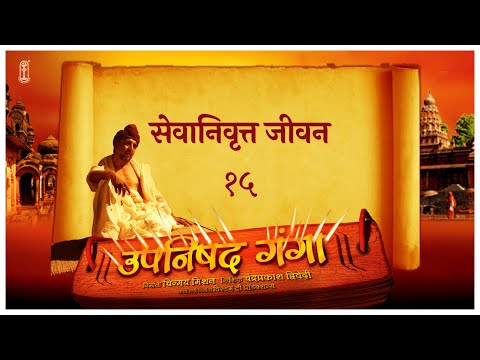
Episode 15 · Retired Life
Four Ashramas – Vanaprastha
Characters Dhritarashtra; Bimbisara and Ajatashatru
The third of the four ashramas or stages of life is the Vanaprastha or the life of semi-retirement. An inner maturity wherein one gives way for the next generation to take up the reins of life in their hands, to facilitate the life of the younger generation by gently advising them whenever required - without unduly imposing oneself, to turn within, and start living a life dedicated to spiritual pursuits that calm one’s mind -characterises the Vanaprastha stage of life.
-
Episode 16 · Renunciation, Part 1
Four Ashramas – Sannyasa, Part 1
Characters Vidyaranya
The fourth of the four four ashramas or stages of life is the Sannyasa ashrama. It is the stage of life dedicated totally to the spiritual pursuit. This stage is characterised by the total giving up of self-centered life, and dedicating oneself for the welfare of the society.
-
Episode 17 · Renunciation, Part 2
Four Ashramas – Sannyasa, Part 2
Characters Yajnavalkya and Maitreyi
The concept of Sannyasa that was dealt with in the earlier episode is further elaborated in this episode. What prompts a person to take to a life of total spirituality? What is his/her higher calling that prompts him to voluntarily renounce? What is expected from such a person? All these ideas are taken up in this episode.
-
Episode 18 · Varna – The Universal Categorisation
Four Varnas
Characters Chanakya and Chandragupta
The ancient varna system of Brahmana, Ksatyriya, Vaishya and Sudra….its misinterpretation, consequent wrong application which lead to the downfall of the Indian society in recent times is discussed. That the varna system is not based on birth but rather on guna and karma – the inherent propensity of a person and the work-tendency of an individual – is brought out in this episode.
-
Episode 19 · Shodasha Samskara – The 16 Milestones of Life, Part 1
Shodasha Samskaras
Characters Surdas
In the Vedic Culture the life of the individual from conception to death is punctuated by the sixteen samskaras or purifications. What are these samskaras? What are the inner significance of these rituals? How do they remind us of the purpose of our birth and how at every step they inform and educate us of the spiritual evolution of the soul…. all these is brought out in these three episodes.
-
Episode 20 · Shodasha Samskara – The 16 Milestones of Life, Part 2
Shodasha Samskaras
Characters Surdas
In the Vedic Culture the life of the individual from conception to death is punctuated by the sixteen samskaras or purifications. What are these samskaras? What are the inner significance of these rituals? How do they remind us of the purpose of our birth and how at every step they inform and educate us of the spiritual evolution of the soul…. all these is brought out in these three episodes.
-
Episode 21 · Shodasha Samskara – The 16 Milestones of Life, Part 3
Shodasha Samskaras
Characters Surdas
In the Vedic Culture the life of the individual from conception
-
Episode 22 · The Theory of Birth & Rebirth
Karma Theory and Punarjanma
Characters Chitraketu
Why is one born? What are the causes of rebirth? How to put an end to the cycle of birth-death-rebirth. What is fate? What is the role of free-will in life? These concepts are dealt with in this episode.







Upanishadic Wisdom
Having established the cultural basis and ethos, the entire Upanishadic Wisdom is presented — the Seeker, the Guru, the Self, God and the World.
-
Episode 23 · Glory of Human Birth
Manushya Janma Mahima
Characters Tulsidas
An animal remains an animal and is bound by its instincts. Conscious self-evolution is possible only in human birth. It is only human-beings who can break the shackles of body and mind and soar high. How to make the best of this rare human life? These ideas are dealt in this episode.
-
Episode 24 · Adhikari – The Seeker of Knowledge
Adhikari
Characters Nachiketa
Success in any field depends on certain capacities and qualifications. Success in the pursuit of Self-Realisation also requires certain pre-requisites such as knowledge of the difference between the Reality and falisty, ability to give up the false, mental adjustments like mind control, sense management etc., and a burning desire to know the Truth. These thoughts are discovered in this episode.
-
Episode 25 · Guru
Guru
Characters Pingala and the 24 Gurus of Dattatreya
Guidance on the Path to Realisation is necessary for almost all. The Experience of the Realised is sure to guide the novice, who is walking the path to Realisation. For the one whose mind is open the whole world becomes the teacher. We can learn both how to be and how not to be from the world. In the spiritual context a Sat-guru is one who instructs you about the Reality and pushes you to the Beyond.
-
Episode 26 · Guru Upasadana – Seeking the Guru
Guru-upasadana
Characters Indra and Virochana
How should one approach the Guru? What should be one’s attitude when one reaches a wise Guru? How to take maximum benefit from his/her teachings? How to apply the teachings in one’s life? These ideas are brought forth by comparing two distinct mind sets – Indra and Virochana.
-
Episode 27 · The Quest
The Student’s Enquiry
Characters Yudhishthira and the Yaksha
Even when one meets the Guru one could fail to gain anything precious from this momentous contact if one’s quest is wrong. What are the things one must enquire from the Guru?
-
Episode 28 · Anatman – The Not-Self
Anatman, the not-Self
Characters Krishna and Subhadra; Yama and Savitri
From this episode starts deeper philosophical enquiry. Knowledge of the Self is the highest and true Spiritual Wisdom. To know the Self, that is, who you are, first know what you are not – the not-Self or the Anatman. The body, mind, and intellect are the not-Self.
-
Episode 29 · Atman – The True Self
Atman, the Self
Characters Arunagirinathar
You are not the matter vestures of the body, mind and the intellect but the pure consciousness that pulsates within these matter vestures and renders them sentient and active. This is an episode that gives an overview of what the Self is. The Self is of the nature of Sat-Chit-Ananda (Existence-Consciousness-Bliss).
-
Episode 30 · The Existence Principle
Sat-svarupa of Atman
Characters Yajnavalkya and Gargi
The Self is of the nature of Sat or Existence. Pure Existence transcends time. It remains the same in the past, present and future. This nature of the Self is brought about in this episode
-
Episode 31 · Consciousness – The Life Principle
Chit-svarupa of Atman
Characters Indra and the Yaksha
The Self is of the nature of Chit or Consciousness. Consciousness is the inner life principle that renders the outer insentient matter vestures like the body, senses and mind, sentient. This facet of the Self is explained in this episode.
-
Episode 32 · The Bliss
Ananda-svarupa of Atman
Characters The Happy Man’s Shirt
Where is the happiness that we are searching for? Inside or outside? Why are we so persistent in our search for happiness? The Upanishads explain that the happiness that we seek is neither in not out, but rather our very nature. In the three episodes, 29-31, the nature of the Self is brought out exhaustively.
-
Episode 33 · Bondage
Bondage
Characters Puranjana
Bondage is the identification of the Self with the not-Self. It is thus just only a misunderstanding of one’s true nature. Bondage is merely mental and not factual. Right thinking dispels bondage; wrong thinking only serves to strengthen it.
-
Episode 34
The Self & the Not-Self
Jada Bharata
-
Episode 35 · God – The Three Questions
Ishwara
Characters The Minister’s Daughter
Episodes 35-41 are about the Lord, his nature and functions.
-
Episode 36 · Maya – The Power of the Lord
Maya
Characters Narada and Krishna
Maya is the creative power of the Lord by which the entire creation is manifested. Maya has two facets – the veiling power and the projecting power. It is made of three gunas: sattva, rajas and tamas.
-
Episode 37 · God’s Incarnations (Avatara)
Avatara
Characters Veda Vyasa
The manifestation or descent of the Lord in a concrete form for the purpose of protecting the cosmic order is called Avatara. When does an Avatara happen? What pre-empts it? What does an Avatara achieve? What are the various types of Avatara? All these are explained in this episode.
-
Episode 38
Devata – The Cosmic Deities
Akbar and Birbal
-
Episode 39 · Om – The Sacred Symbol
Om
Characters The Price of the Gem
Om is the sound-representation of the Lord. It is made of three syllables – a, u and m. What is so special about Om. What do these three syllables symbolise? Why is it considered to be a sacred chant? What constitutes its universality? These concepts are elaborated in this episode.
-
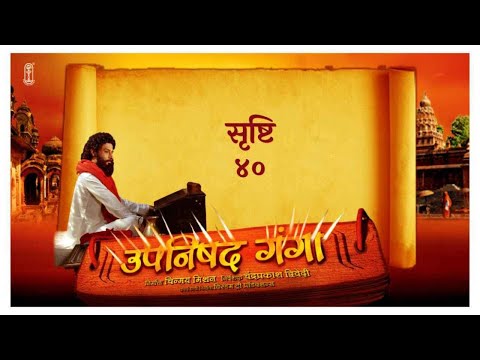
Episode 40 · The Creation
Srishti
Characters Varahamihira
What is creation? How is the world created? Can we discover the creator through the creation? What do the various systems of Indian thought say about the original source of creation? Why do the Upanishads speak of the identity between the Creator and the creation? These are some of the important concepts discussed in this episode.
-
Episode 41 · God, Me & The World
Jiva-jagat-ishwara Sambandha
Characters Prahlada
This episode discusses the essential unity between the individual, the cosmos, and the Creator. What is the result of such knowledge? How would a person who has this exalted wisdom relate to his fellow beings? And how does one who is devoid of this knowledge – who sees himself, the world and the Lord as different –live in this world? All these ideas are discussed in this episode.
-
Episode 42 · The Three Realities
Sattatraya
Characters Janaka and Ashtavakra; Ribhu and Nidagha
The three levels of reality are – the seeming reality of appearance, the transactional reality, and the absolute reality. What characterises appearance? What constitutes transactional reality? And what is the absolute Reality? These concepts are dealt with in this episode.





Spiritual Practice
The practical steps to actualise this wisdom in one’s life — the gunas, sadhana, and the yogas of action, devotion and knowledge.
-
Episode 43 · Three Personality Traits
Three Gunas
Characters Meerabai
The gunas are the psychological traits of the individual personality. They are threefold: sattva or serenity, rajas or dynamism, and tamas or inertia. The difference in ratio of these three in individuals is the cause for the variety. What are the effects of their preponderance? How do we nurture one guna and diminish the other? These are all dealt with in this episode.
-
Episode 44 · Inborn Traits
Vasanas
Characters Mohan and the Princess; Sant Eknath
Vasanas are deep-seated tendencies that govern the individual’s thinking and action. These tendencies are also called samskaras. How to recognise one’s vasanas? How are they strengthened? How to weaken them? How to cultivate good samskaras? These are some of the topics dealt with in this episode.
-
Episode 45 · Preparatory Spiritual Practices
Sadhana, Part 1
Characters Pundalik
Sadhana means spiritual practice. Worship, charity, austerity, visiting sacred places, meeting holy people and so on enable mental purity and makes one qualified to walk the spiritual path. These are called the outer limbs of spiritual practice.
-
Episode 46 · Advanced Spiritual Practices
Sadhana, Part 2
Characters Khandikya and Keshidhvaja
The inner limbs of spiritual practice are: 1) shravana, listening to the exposition of the scriptural thoughts 2) one’s personal reflection and 3) meditation on what one has intellectually grasped. These ideas are presented in this episode.
-
Episode 47 · Karma Yoga – The Yoga of Action
Karma Yoga
Characters Haridas and Tansen
Performance of one’s duties dedicating it to a higher altar, free of worry or anxiety for the result alters one’s life. Such performance of action is termed karma-yoga. It becomes a means to Self-Realisation by purifying one’s inner personality and gives poise to one’s spiritual pursuit.
-
Episode 48 · Bhakti Yoga – The Yoga of Devotion
Bhakti Yoga
Characters Bhadrachala Ramadas
Love and devotion to the Lord washes the soul of all impurities. It fills the heart with indescribable joy. It fulfils one’s life and such a person also becomes a source of inspiration to the world around. How to attain the Lord through the path of devotion is picturized through the life of the great saint Bhadrachala Ramadas.
-
Episode 49 · Jnana Yoga – The Yoga of Knowledge
Jnana Yoga
Characters Sadashiva Brahmendra
Jnana Yoga is the path of attaining the supreme Truth through rational enquiry and mediation. What are the features of this path? How does one do the scriptural enquiry? What is the art of reflection? How does one mediate on the supreme Reality? This episode is on these lines.
-
Episode 50 · The Great Statements of Truth (Mahavakyas)
Mahavakya
Characters Aruni and Shvetaketu; Janaka and Shukadeva
Mahavakayas such as Tat Tvam Asi, Aham Brahmasmi are short pithy statements of the Upanishads that declare the essential unity of the individual Self, Atman, with the Supreme Reality, Brahman. In essence they reveal that one is indeed what one is searching for – undying existence, supreme knowledge and infinite bliss. These declarations are the doorway to Truth. All the yogas mentioned in the earlier three episodes are only to prepare oneself for this ultimate Self-Knowledge.
-
Episode 51 · Liberation (Mukti)
Jivanmukti and Videhamukti
Characters Paravailla Swami
The one who has actually directly experienced his oneness with the Supreme is called a Realised saint. Though he lives amongst us he operates from a different realm altogether which we cannot even visualise from our present level of individuality. Such a person remains unaffected by joysand sorrow, pain and pleasure, honour and dishonour. He is thus liberated even while living, a jivan-mukta. When his body ceases at the end of its physical tenure, he is no more reborn, since the cause for rebirth, which is ignorance, is absent in him.


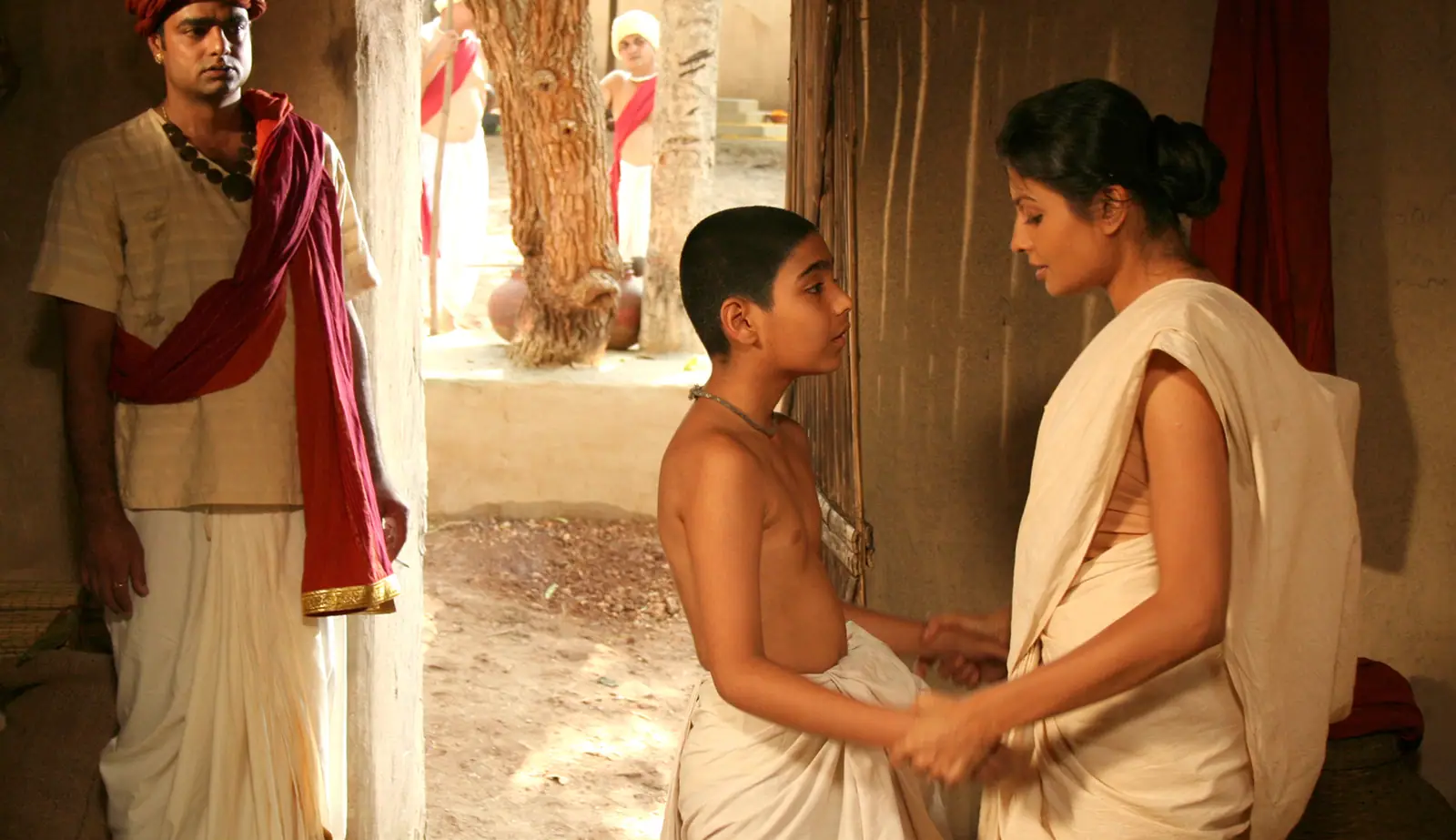
Gratitude
An expression of gratefulness for this wisdom, which has made India proud, noble and admired the world over.
-
Episode 52 · Master–Disciple Relation – An Expression of Gratitude
Gratitude & Upanishad Ganga flows on
Characters Adi Shankara and Totaka
Like the perennial Ganges born in the Himalayas gushes to nourish the plains, so too this immortal wisdom of the Rishis have continued to nourish Indian Culture and served the world by bearing aloft the Lamp of Wisdom for all. It flows through the lineage of teachers and students who have been ever eager to share it with us. To this lineage of teachers our gratitude is ever due. To live this knowledge and share it with others is the true offering of gratitude that we can offer to this perennial Ganges of the Upanishadic Wisdom.